

Six months ago I was happy, like many of you- when I stepped outside and heard birds singing or calling, that’s what I heard- birds. That’s not to say that I wasn’t able to identify ANY birds by sound, but my repertoire was far more limited.
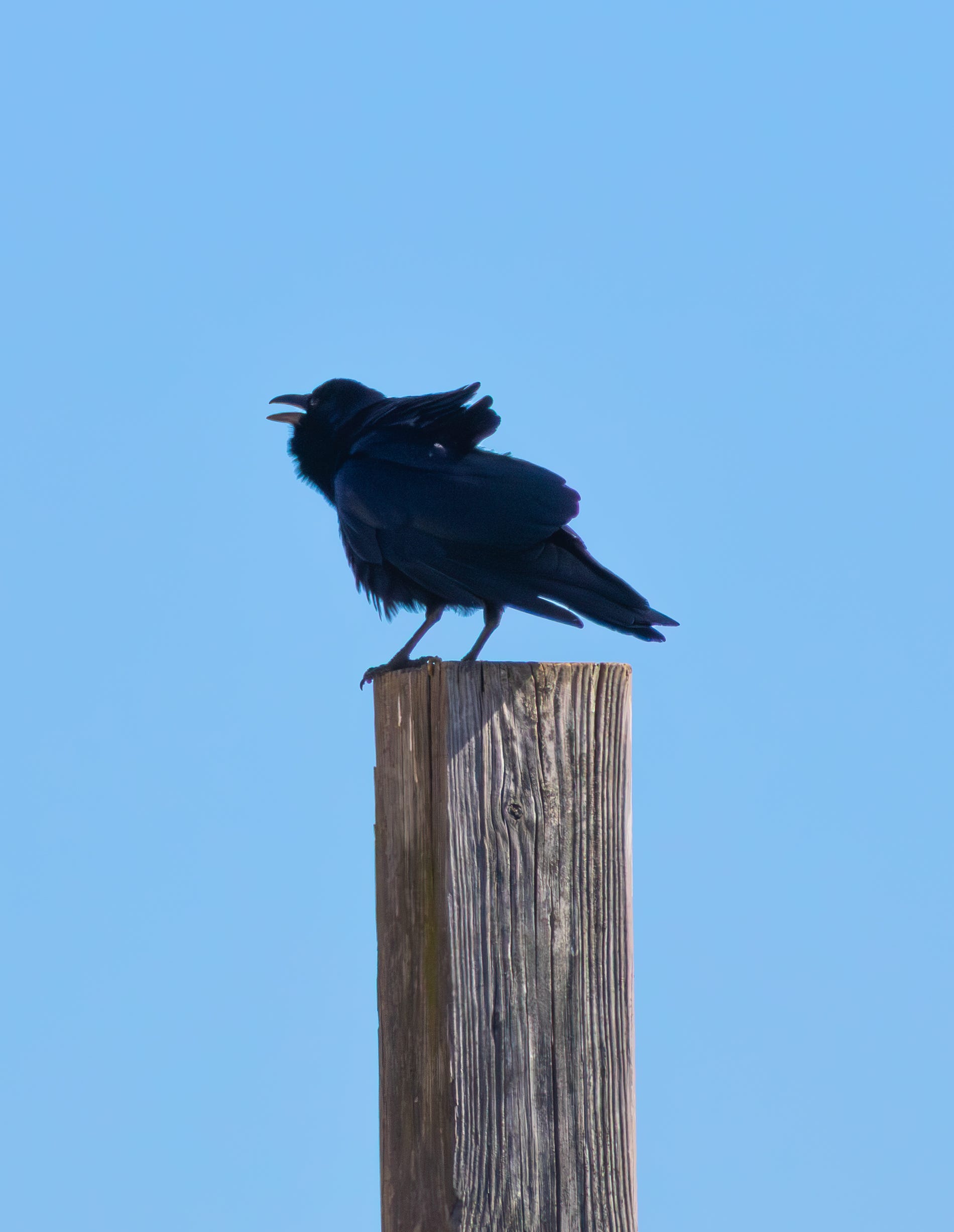
I mean, who doesn’t know the sound of Canada geese honking, or the cawing of crows? Years in the deer woods have taught me a second language in blue jay, even if I don’t speak it. The lonely twitter and cry of loons is hard to mistake. The hoo hoo of great horned owls and who-cooks-for-you of barred owls is easy enough. Over decades dedicated to time outside you’re going to build up a library of sounds.
Without adding them up, I believe I can identify well over a hundred bird species just by sound. This catalog I have built has been greatly accelerated by daily birding over the last 6 months.
Of course I had the foundation I built up over time. What daily birding did was get me very familiar with the common, year-round residents on our property. Northern cardinals, Carolina wrens, Carolina chickadees, American and fish crows, and blue jays to start. I quickly added red-bellied woodpeckers, eastern towhees, pine warblers and more. For me still, I can only tell American and fish crows apart by sound.
Here’s how that helped me identify new species- you become so familiar with your baseline species that when you step out and hear a newcomer they are instantly recognizable as foreign. Here pine warblers are a constant presence. Their simple but pleasant trill is heard daily. The other day when I heard the more complex call of the northern parula I immediately reached for my binos. You don’t have to memorize every species before you go out. You get familiar with your resident birds, then when a new sound comes along it will stick out like a sore thumb.
Merlin, of course, is a superb tool for identifying new birds. While I still occasionally use the step by step guide to identify birds, now I’m more often using the sound ID feature to give a clue as to what’s out there and what to look for. If this feels like cheating- we don’t live in the analog world anymore.
I will tell you the story of one of the more satisfying analog bird ID’s I made back in the day. I was always an avid morel mushroom forager in Michigan. I started realizing I kept hearing the same call repeatedly as I foraged. “Zwee-zoo-zoo-ZEE!” I started carrying binos and my field guide and after a lot of hard work finally spotted the culprit- the black-throated green warbler. During morel season (May) they are everywhere in Northern Michigan. I have heard them on a regular basis here in Georgia earlier in the spring, but sadly did not see or hear a single one this spring.
One thing Merlin has done for me is reveal the birds I was familiar with by sound, but had never put together with the species. It turns out the drawn out questioning whine I heard all summer in Michigan was an eastern wood pewee. Several years ago a pair of yellow-billed cuckoos passed through our backyard. I don’t know how I even knew they were cuckoos, but when I did the step-by-step ID, it confirmed my hunch. The surprise came this year when I played the recorded song on Merlin and found out I had been hearing this sound all my life and never knew what it was. When I played the song of the black-billed cuckoo, that too was very familiar. The most embarrassing one was the eastern bluebird. At his home in Brutus Michigan my grandfather had practically littered the countryside with bluebird boxes. I grew up with the darn things, and yet it wasn’t until this winter that I final put their burbling call with the bird. I should have known wood ducks years ago and didn’t finally pin down their call until last fall while deer hunting.

I guess all this is a long-winded way to say step outside, learn the sounds of your everyday backyard birds, and this will make identifying rare and migrant birds that much easier. When you stumble across a new one, hang around until you think you have the sound nailed down. If you hear a variation, double-check that it’s not a new species. This spring I got familiar with the squeaky wheel sound of black-and-white warblers. Then one day I heard a similar call that was just slightly off. This was a blackpoll warbler. Then one day Merlin told me I had black-and-white warblers around, only to find they were blackpoll warblers. This is why you can’t always trust Merlin and need to independently verify that the call Merlin is hearing matches the bird. I never put birds on my eBird lists solely off a Merlin sound ID.
As humans we are so visually attuned, that identifying birds by sound doesn’t come naturally to us. I constantly miss birds because I’m too busy looking and I’m not listening. Birds like American crows- how do you miss that? Birding is all about paying attention, and while for us visual ID remains the most sure-fire method of ID’ing birds, sound will reveal far more birds than you can possibly see. Sound carries through trees and brush, from high in the sky, and from that private property you can’t access. So by all means make it a practice to drop your binos, put your phone away and listen for a bit. Merlin is no replacement for your own ears.
I also want to make a note about the morning chorus- while it is awe inspiring, it is perhaps my least favorite time to ID by sound. I stepped out several times this spring before daylight, turned on Merlin, then tried listening myself. Merlin was easily overwhelmed by the noise, and all it picked up was cardinals, Carolina wrens, and tufted titmice, all of which were screaming at the top of their lungs. It wasn’t even picking up the jays and crows calling from nearby. I too found it overwhelming and went back inside. An hour or two after daylight once the chorus has died down and the birds are calling as they forage is a much easier time to ID birds by sound.
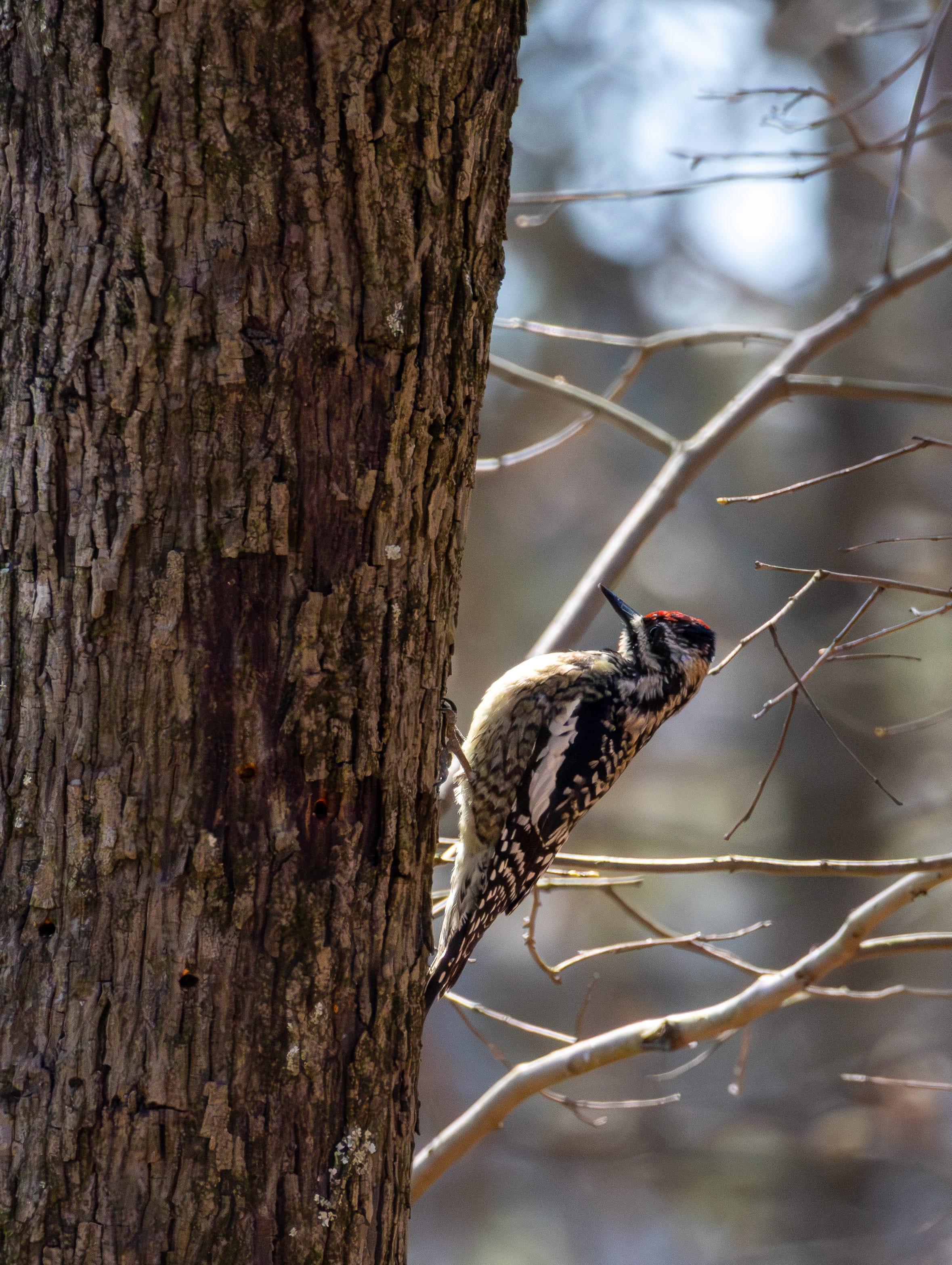
When we think of sound ID, we often think of bird songs. Don’t overlook other bird sounds for ID’s- contact calls, alarm calls etc. The drumming of ruffed grouse comes to mind. The alarm/travel/contact call of pileated woodpeckers is about the only sound they make most of us will hear, but it is very diagnostic. Many woodpeckers make variations of this sound and often it’s only their alarm call that we will hear. Some folks can identify woodpeckers by the sound of their drumming, but I’m not there yet. Blue jays have that alarm call they do, but also a couple dozen other sounds they make. My favorite is the “clement-clement” they make while traveling. We’re all familiar with the cooing of mourning doves, but the specific sound they make when they take off in flight is also diagnostic. Personally I find the chirps and chips of cardinals a bit annoying because I always think it’s some other, smaller bird.
Whatever you do, get out there, pay attention, get to know your local bird sounds, and have fun learning new ones. Sound ID is just another facet of birding that enhances the experience.
I'm not an avid birder in that I don't usually go seeking them out. I'm blessed we have a wide variety in the area where we live. I use Merlin most mornings when I sit on the front stoop with my coffee just to hear what's out there. Two years ago I heard one I didn't recognize and it was a Great Crested Flycatcher. Didn't even know we had those here in Minnesota. Took me another two days to finally see it.