
Getting Away From It All.

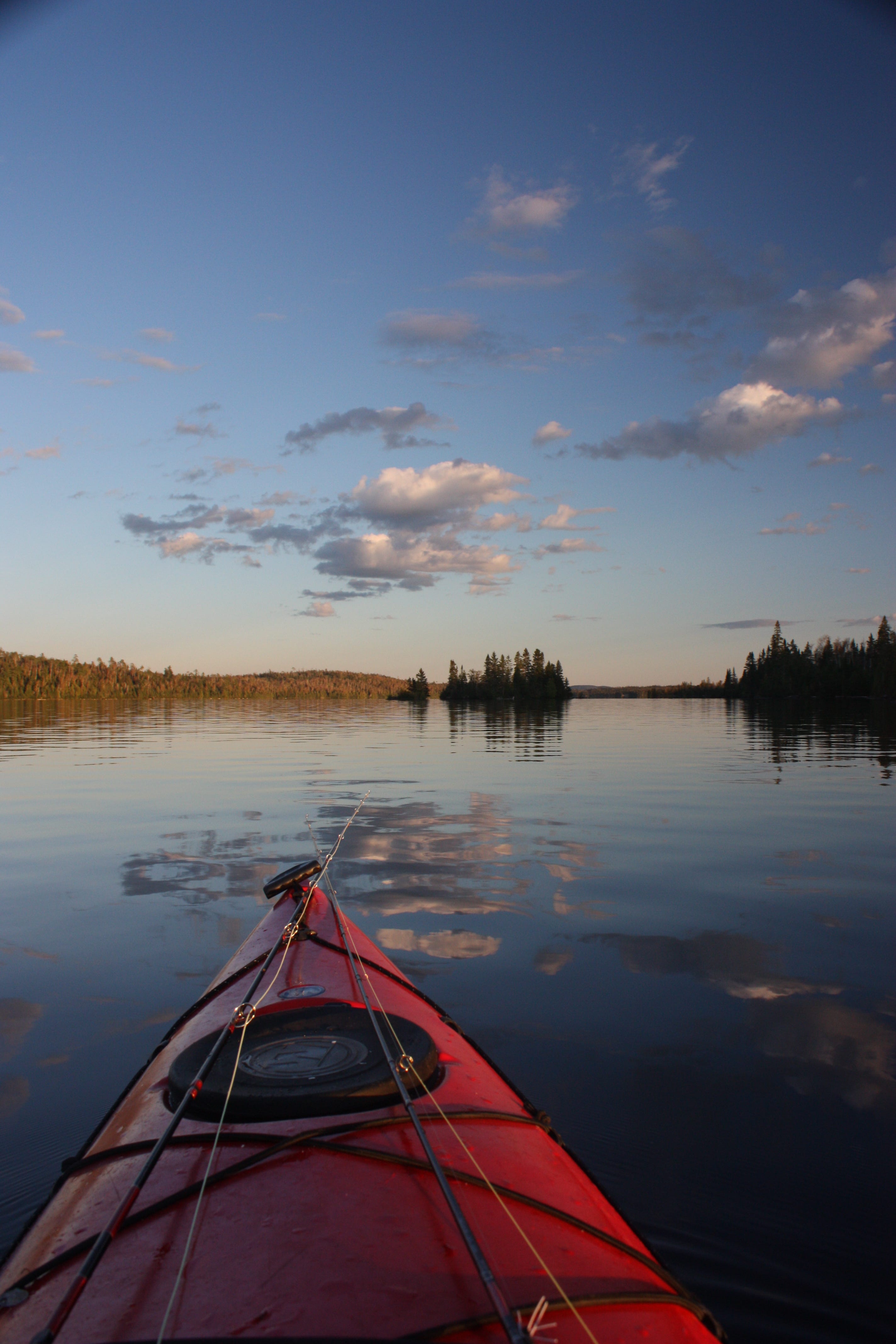
I can’t remember the last time I got away from it all. I mean really got away from it all. Maybe it was 2011 when my brother and I went to Nipigon. I drove the 20 miles back to town twice that trip to message my girlfriend and post stuff to social media, so it may not count. The next year I went for a long weekend to the Ranger Lake district of Ontario, so maybe that was it. Maybe 2009 when I took a week-long camping trip to Pukaskwa National Park in Ontario with family.
One thing I can tell you is getting away from it all was literal circa 1981.
That year my brother and I got to go on a fishing trip with my dad and grandpa for 5 days. We rented a cabin at Welker’s Lodge in Grand Marais, Michigan. The plan was to fish the breakwall for whitefish and steelhead, and the local streams for trout. Grandma baked a batch of lethally fibrous bran muffins for us, which my brother weaponized into a potent gas. We packed up our food and gear, and we were gone.
This wasn’t a wilderness trip. Though the town of Grand Marais is somewhat remote, Welker’s is right in town. Yet there we were in Grand Marais, no internet, no radio, no phone in the cabin. Sure we could use a pay phone in a real phone booth, if there was an actual emergency. Grandma or my stepmom could leave a message at Welker’s desk if necessary, but long distance calls cost money. No emergencies happened, so we went on this trip and did not speak to our loved ones we left behind until we returned five days later. No texts, no emails, and definitely no calls while we were on the river. We didn’t go back to the cabin and scroll on a device when the day was done. We cooked dinner, did dishes, my brother and I played, and listened to dad and grandpa tell stories about fishing trips past. I think I read a couple outdoor magazines left behind in the cabin.
We lived like kings that weekend, eating menominee whitefish we caught off the breakwall for every meal. We saw a ghost bridge in the fog over Lake Superior which I believe was an actual mirage, climbed Grand Sable dune, and caught more whitefish at Hurricane River. Then we went back home to family, refreshed and happy to be alive.
If that sounds extreme, my grandfather used to do a two-week fishing trip to Prickett Lake in the western UP for several years running, including before the Mackinaw Bridge opened and they had to take a ferry across the Straits. They were living in Waterford Michigan at the time, and I-75 connecting metro Detroit and Mackinaw City wasn’t complete until 1973. I have no idea how long it took to get from the Pontiac area of Michigan to the western part of the UP but if you told me it took part of two days, I wouldn’t be surprised. Driving those cars on those roads with a ferry crossing in the middle I can’t imagine it took less than 10 hours to get up there.
And yet he made this trip several years running. He was gone for two weeks. There was absolutely no phone or means of communication with home from camp in the UP with southern Michigan. That’s just the way it was- you went on a trip, you told your wife and family when you would be back and barring some extreme emergency you did not speak to them again until you pulled into the driveway. Maybe you went to town once for resupply and used the pay phone to check in, but it took a fistful of quarters to make the call, and it cut you off within a few minutes, so you kept things brief and to the point.
This was not considered an inconvenience, it was part of the allure. It was what we meant when we said “getting away from it all.” It was literal, not a figure of speech.
That all began to change, especially in the 1990s. In 1995 I was working at a Manhattan public relations firm called Burson-Marsteller. One day I got called into a meeting to discuss this thing called the World Wide Web. They showed us software by a company called America Online or AOL for short. They showed us how to go virtual shopping using the software. I remember it looked like a virtual mall on the screen with icons for the different stores and then you could enter and browse through products. My memory is imperfect, but it was very clunky. I thought it was the stupidest thing I’d ever seen. I wondered why anyone would do this when they could just go to the store instead of sitting at their desk, waiting long periods of time for a new screen to load so you could see the items you want to look at and then wait an equally long period of time for the screen to load if the product wasn’t what you wanted . It all seemed like such a huge waste of time.
We all know what happened. AOL may not have been a huge player in online commerce, not by today’s standards, but it definitely was a precursor to the e-commerce we have today. What is funny to me is it was actually after that cell phones became more ubiquitous. To my linear way of thinking phones were phones and computers were computers. Little did I know that we would merge the two into a seamless universe of communication, information and commerce that would revolutionize the world. The effect that this had on the outdoors was profound. The outdoor world began to shrink. There were fewer and fewer places you could go and not be in touch.
Getting away from it all was becoming a figure of speech in the late 2000s. I started getting cellphone service on my most remote trout streams in Northern Michigan. All of a sudden I would look at my phone and see I had Facebook notifications while I was ass deep in a trout stream 20 miles from the nearest town. Getting away from it all was starting to take some work.
In 2015 it all came crashing down. I got a phone call from my friend and superb writer, Dave Karczynski. He wanted a companion to go on a trip to Labrador, driving from his place in Ann Arbor, Michigan to Labrador City then taking a float plane to the lodge, 150 miles into the wilderness. I relished this prospect for multiple reasons, not the least of which was the opportunity to get away from it all. I had a new girlfriend, Marsha, who I dearly loved, but in my life, I felt overwhelmed and buried under an avalanche of work, social media and constant contact. I didn’t want to get away from my girlfriend, but I did want to get away from the world. If you don’t know, Labrador is one of the most remote places in the world, with a tiny population and little infrastructure. And, of course, giant brook trout.
This was to be a two week trip. I would be gone from my new home in Georgia for 15 days. I told Marsha once I got to Canada I would be out of touch as I was unable to afford a cell phone plan. It went without saying, the remote camp in Labrador would be completely off the grid.
Boy was I wrong.
It turned out the Lodge was not off the grid. That very season they got a satellite uplink which they told us we were welcome to use as long as we kept it limited to a few minutes per day. So of course I felt the need to reach out to Marsha and let her know we were OK and check on how she’s doing. Dave and I had a tremendous time and possibly the best road trip anyone short of Jack Kerouac has ever had.
But we did not get away from it all.
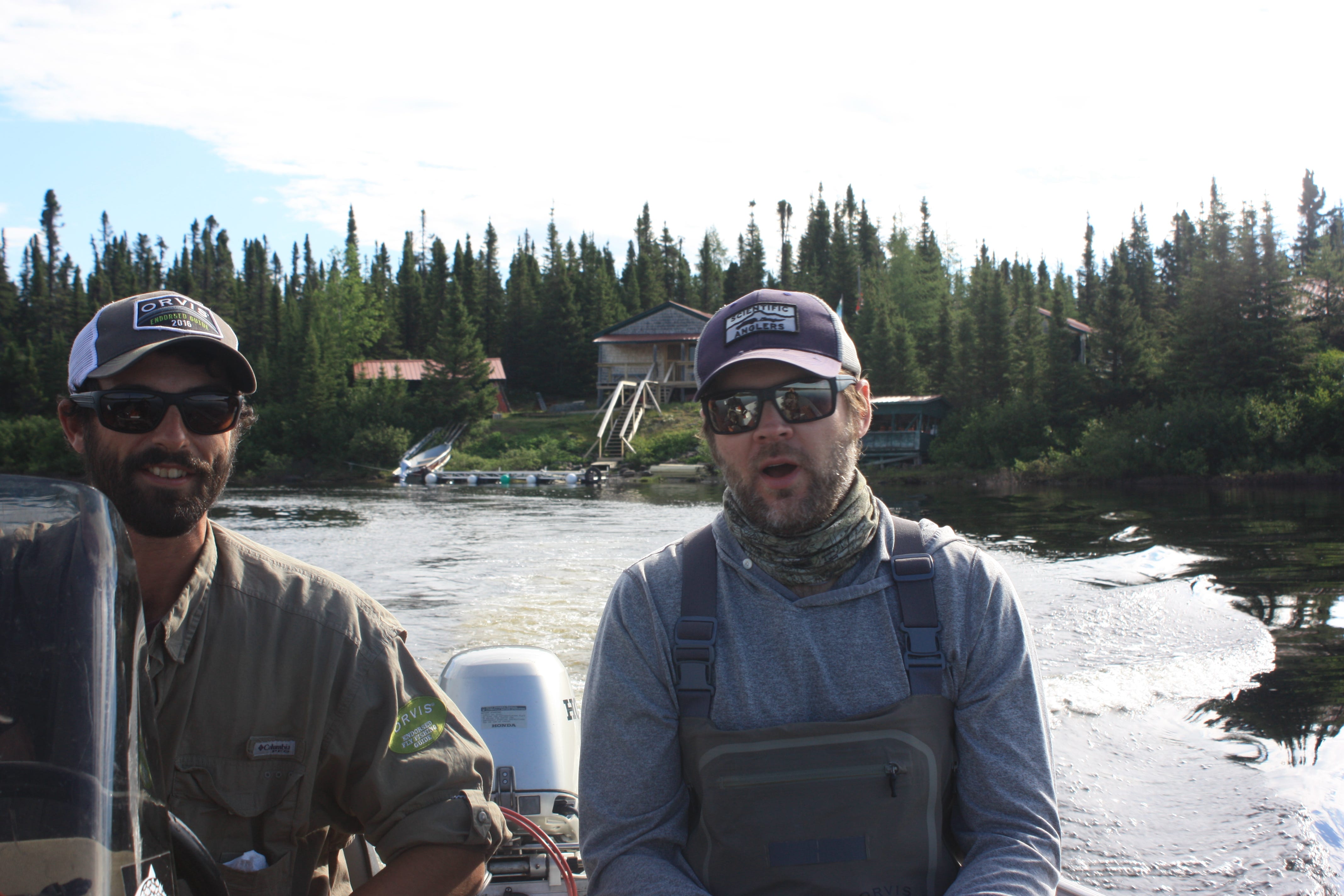
Just a couple years later I got an invitation from my friend Louis Cahill to come with him to Andros to fish for bonefish. All I had to do was buy my plane ticket and bring some cash for tips for the guides and staff. I would, of course, be completely out of touch. In case of emergency I could use the landline at the lodge, but there was no cell signal. I kissed Marsha goodbye, drove to the airport and got on the plane with the knowledge that I would speak to her in seven days. Imagine again my surprise at going to this remote outpost in another country only to find out that they had just gotten satellite internet, and we were free to use it all we wanted. I had a great time and it was a dream trip. I caught a 13 pound bonefish, the fish of several lifetimes. I had experiences I will never forget. I suppose this sounds selfish that I don’t love Marsha or my daughter or the other people I should stay in touch with, but you have to realize I do not have the same baseline as younger generations who grew up with cell phones and Internet. I think I grew up with a pretty humane baseline. We weren’t completely without technology or communication, it was just far more sparse, expensive, and difficult to use.
Imagine yourself a poor lad from an earlier time who felt his only chance at financial success was to join up on a whaling ship for shares. Then you went away on your ship and you engaged in the act of harpooning whales, flensing and rendering blubber, for 3 to 5 years at a time. Your loved ones could be sitting at home all that time perhaps in financial distress, but holding the thought you were completely unobtainable until such time as your ship returns to port. On a regular basis boats never returned to port. The British had a legal process for declaring deceased men of lost ships so that widows could claim insurance or remarry. Occasionally, due to a variety of circumstances, a long-lost harpooner could reappear out of nowhere eight years later to find the insurance collected, his wife remarried, and his home presided over by another man.
I don’t think I’ve ever aspired to going back to those days. But getting away from it all had a definite literal interpretation in my childhood that gradually eroded until now it means nothing. It is a figure of speech instead of a literal act. I think we are the poorer for that.
I love my technology and use it every day. Social media has a shrinking role in my life. I feel like having instant communication has helped a lot of people who feel vulnerable in the outdoors to get out there and do things they wouldn’t do without it. And if I ever take a trip to the Arctic you can bet I’ll have an inReach in my bag.
All of this tech comes with some costs, not the least of which are the benefits of undistracted immersion in nature.
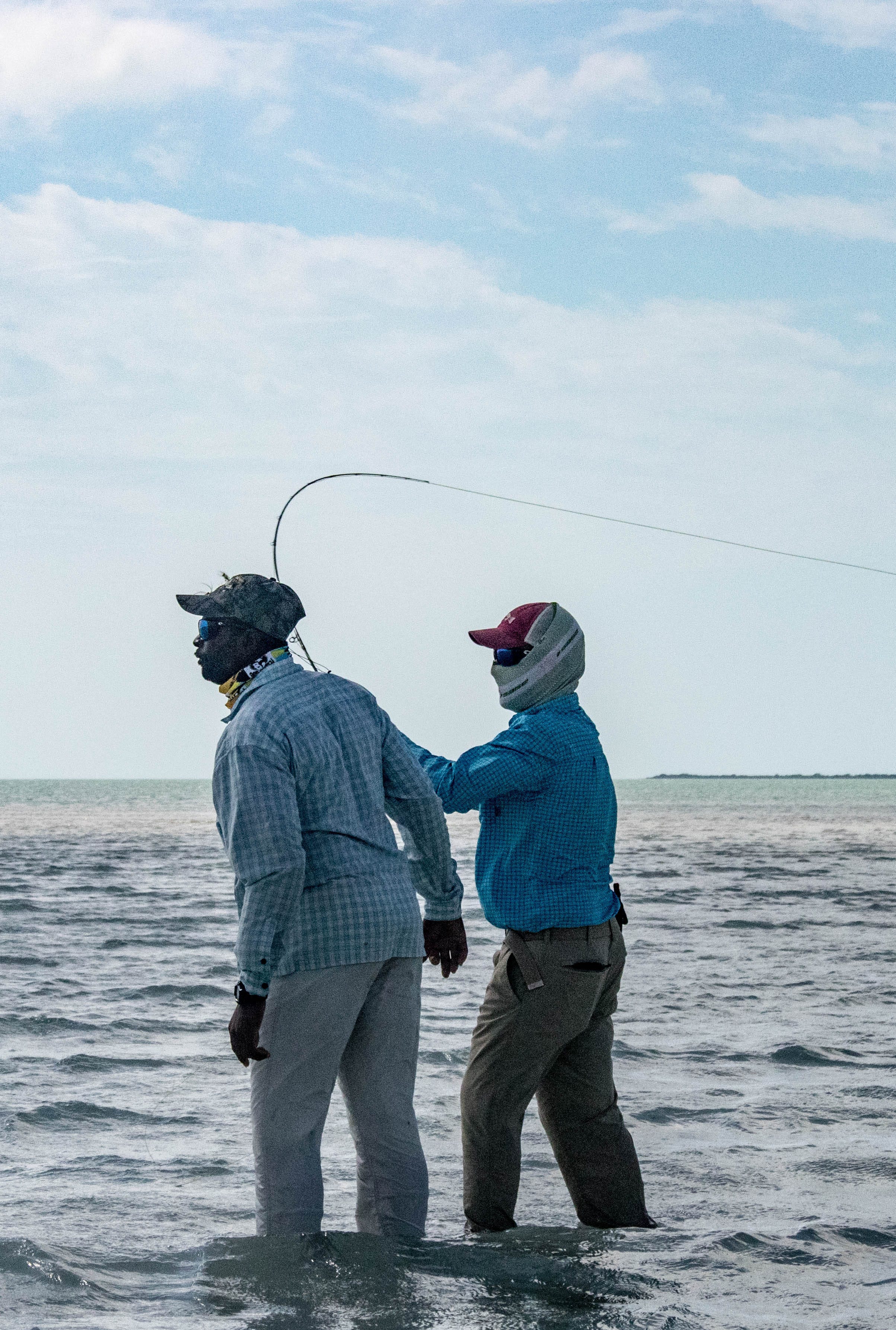
The Appalachian mountains are still a place you can go and not be in touch. While it’s true most mountain towns have cell service, a lot of the places I actually fish do not, so it is possible to go fishing for a day and not be bothered by my phone. No one is going to take an inReach for a day of fishing.
Last year one of the major US cellular companies announced a new satellite phone service, allowing anyone to call from anywhere on the planet. I haven’t heard much about it since. The other day my service was down and my phone tried to coach me through sending a text via satellite, but it took so long to link up I gave up on it.
For most of us outdoor recreation is meant to be a respite from our day to day lives. We are forsaking the bustle and bad news of daily life to have our souls renewed in the natural world. We exchange electronic chatter for the song of birds, the sighing of wind, and the burble of water. All of us have a primal need for connection with nature to recharge whatever it is that is depleted by daily life. Souls replenished we return to our families, jobs and responsibilities better able to engage with them.
My experience is that while a day immersed in nature without electronic buzz is great, three days is, better, and a week will just about cure you, spiritually speaking. While any time outdoors is time well spent, it is extended periods away that really recharge the internal batteries. Last year I did a 4 day canoe trip in which there was little service and I kept my phone put away to save battery. I made it a point not to look at news or social media during the periods my phone was on and we had signal. The spiritual refreshment I experienced was profound. It takes work these days to get away from it all. You have to be determined, but it is well worth it.
It is astounding how much I miss out on when there is a screen nearby. A few minutes ago I set my phone down to take a sip of coffee, leaving the screen open with your words on it. My brain was keeping track of the lit screen and not the taste of my coffee, not the rainfall, not the birdsong, not the slowly brightening day. I closed the screen and all of that sensory input came rushing back in.
I read once that even when we are not distracted our brains constantly receive so much sensory input that it can only process a minuscule percentage. Having a screen in the face (or in our ears) really obscures so much of what we are experiencing.